
Before Coating
- Water standing for days after rain
- Outlets half blocked with debris
- Rust rings where ponds dry out
- Ponds behind equipment curbs
- Gutters spilling over in storms
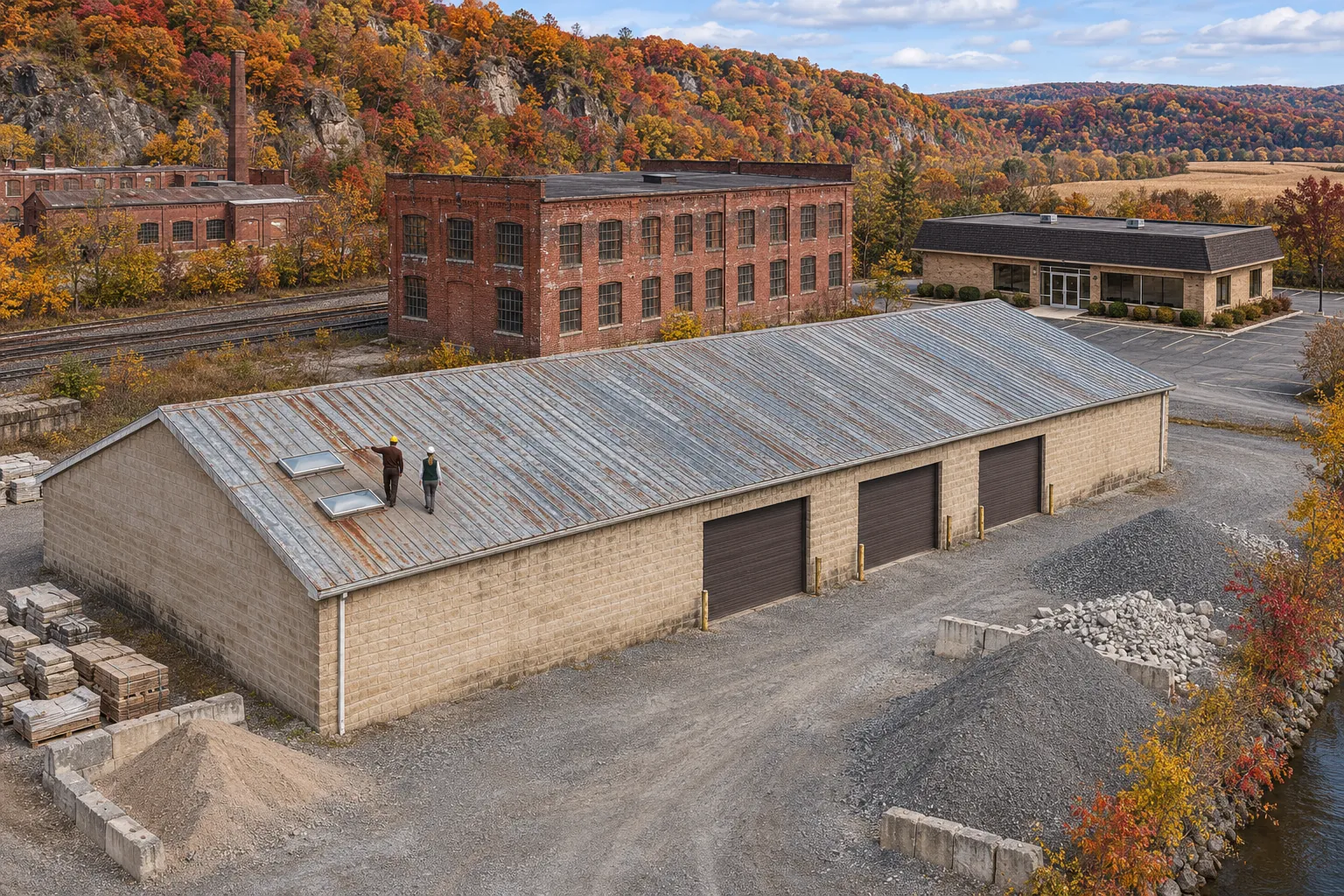
East Stroudsburg metal roof coating on low-slope roofs starts with the water. We trace why it stays, fix the cause, then pick the coating.
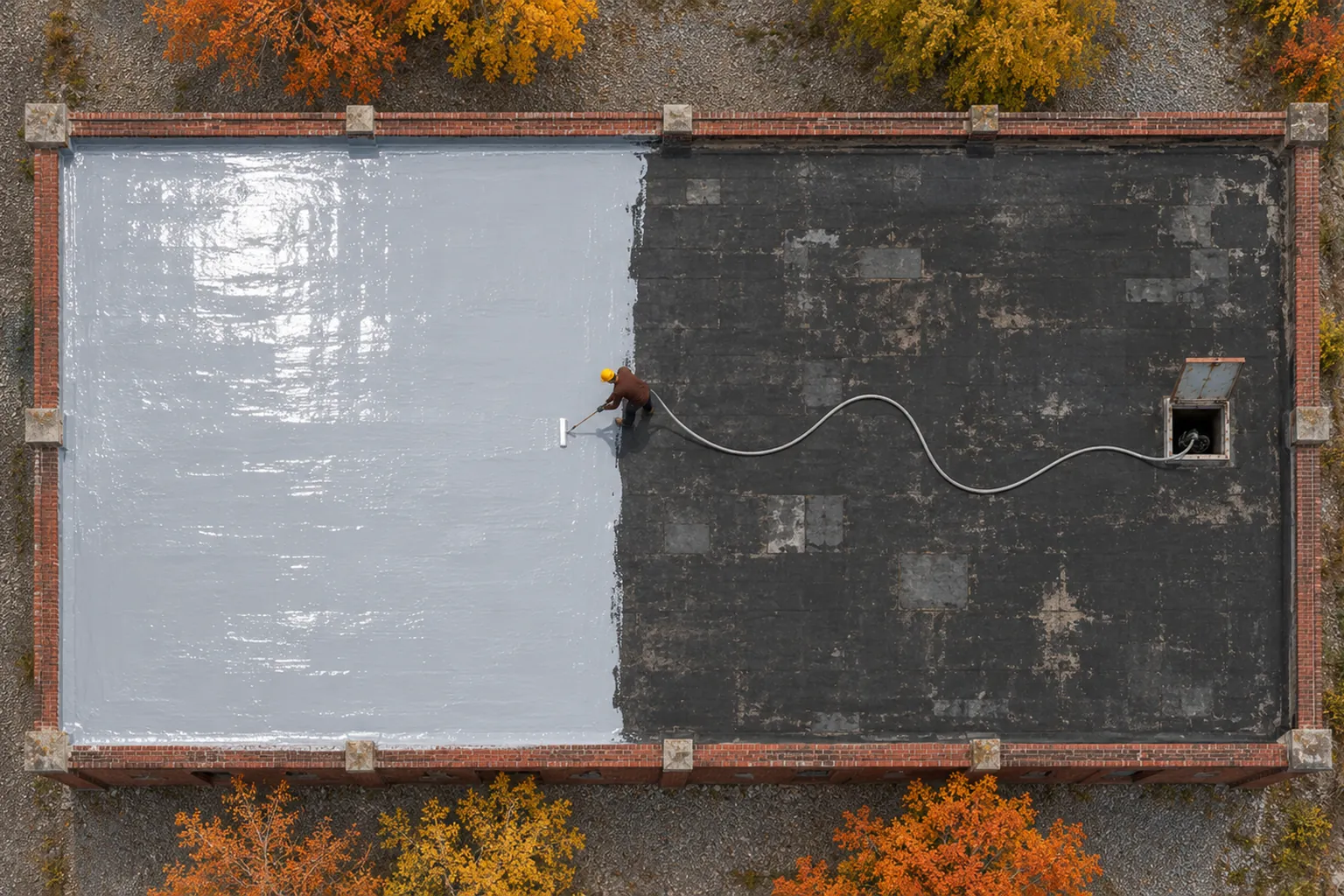
East Stroudsburg metal roof coating on low-slope buildings begins with the spots where water stays after rain. Blocked outlets, leaves and grit against curbs, and panels that have bent or settled all leave water behind. We find which one is at work before choosing silicone or any other system.
A coating leaves the slope as it is, so drainage repairs and wet material come first, and the coating choice follows whatever water still sits once those are done.
Water that stays on a roof has a reason. These five come up most often.
Leaves and grit pack the strainer, so water rises around it after every storm.
We clear the outlet, repair its flashing, and add a strainer that keeps debris out.
Panels that settled over a purlin or bent under foot leave a shallow dish.
Bent panels get replaced or built up, and the area is checked for rust underneath.
Curbs set across the slope dam water behind them.
Small crickets or outlet changes move that water before coating reaches the curb.
Years of standing water soak the insulation below.
Probes find wet material, and those sections get replaced before any coat goes on.
Repeated wetting and drying leaves rust in the shape of the pond.
Rust gets brushed and primed, and the area takes extra coating thickness.
Undersized or clogged gutters spill water back over the roof edge in heavy rain.
Gutters get cleared, resealed, and checked for size before coating stops at the eave.
A low-slope East Stroudsburg roof before drainage work and coating, then after.
Low-slope roofs in East Stroudsburg usually take one of these paths.
| Option | Goes Over | Build | Plan Around |
|---|---|---|---|
| Silicone after drainage repairs | Roofs with minor remaining ponds | Primer and thick silicone | Silicone-only recoats |
| Tapered build-up and coating | Dished areas | Added slope, then coating | Outlet locations |
| Outlet and curb repairs only | Roofs with one problem area | Drain and flashing work | Field left uncoated |
| Section replacement and coating | Wet insulation under ponds | New material, then coating | Weather window |
Call and tell us where the water sits and for how long. We will check the outlets and what lies under the low spots.
Five steps, with drainage fixed before coating starts.
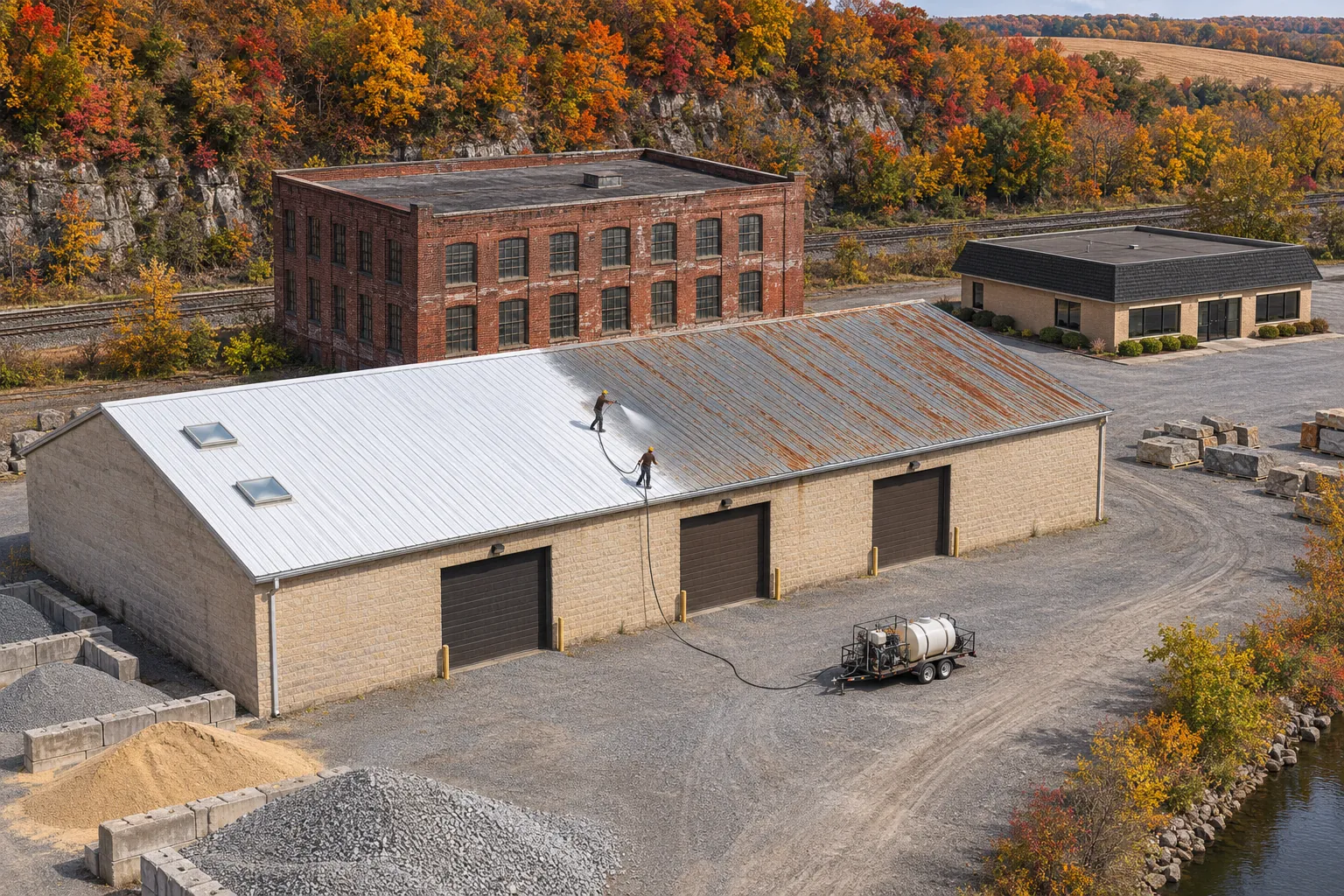
Low spots, outlets, curbs, and panels get mapped after rain where possible, so we see where the water actually stays.
Strainers, drains, and scuppers are cleared and reflashed, and debris is hauled off the roof.
Suspect areas of the roof are probed or cored, and wet insulation is marked for replacement.
Bent panels, dished areas, and curb dams get repaired or built up so less water stays.
Silicone or another system goes on at measured thickness once the roof is dry and the forecast holds.
Our metal roof coating work covers Easton plus five towns, East Stroudsburg included. Not on the list? Call us or send us a message.
Warehouse roofs with mixed old finishes, tested first.
Repaired panel laps checked for movement first.
Exhaust residue cleaned from vents before coating.
Peeling coating opened up to find hidden rust.
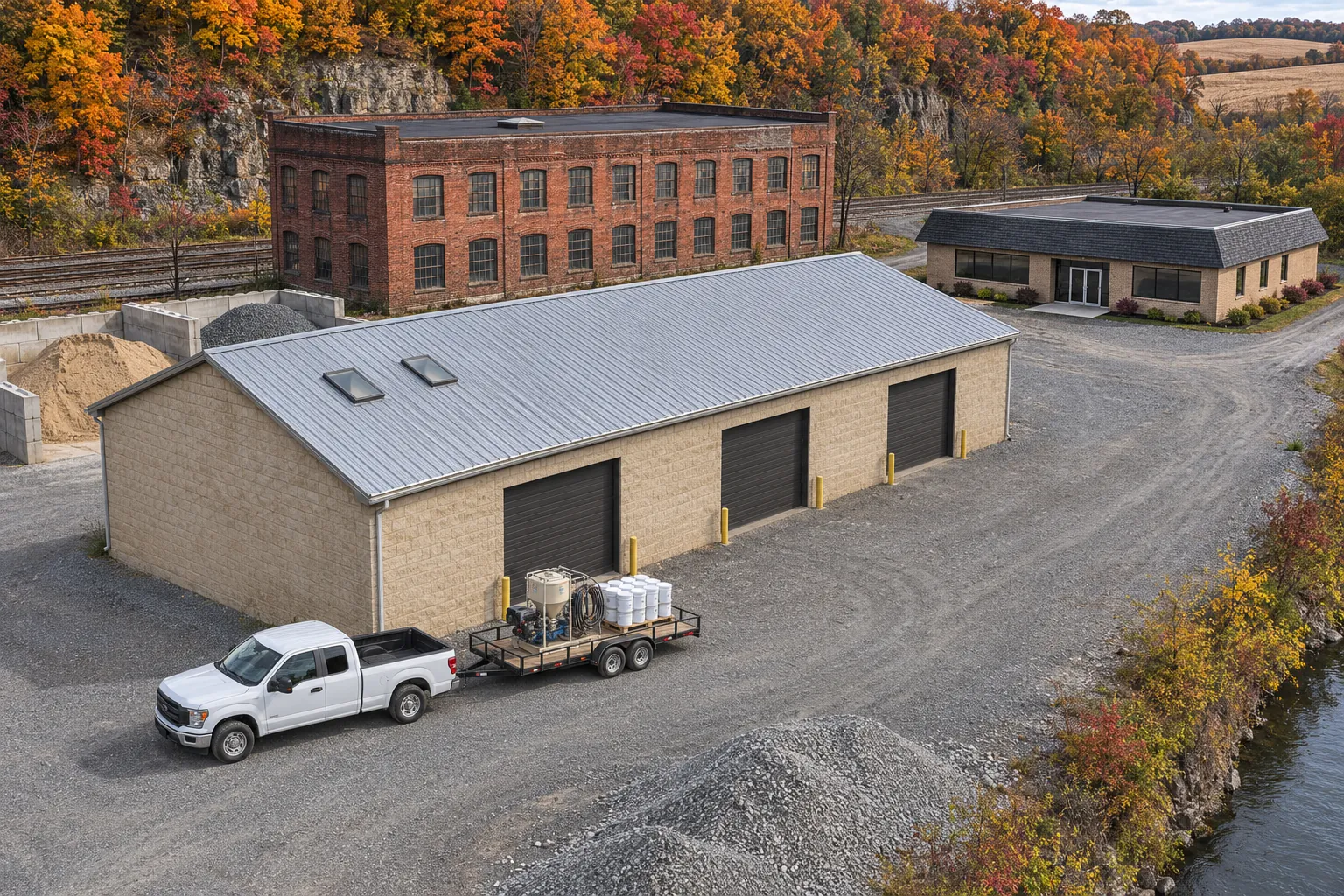
Question about your own roof?
Call UsBecause the reason water stays decides the work. We look at outlets, debris, and panel shape, and at what the silicone product allows for ponding. Surface protection leaves drainage corrections and wet material underneath unsolved, so those come first.
Yes. East Stroudsburg is one of five towns we cover from Easton, with the same inspection and repair order as every other job. The walk there pays extra attention to outlets and low spots.
Work on retail and office roofs runs in sections, with prep and coating near entrances timed for slow hours and walkways kept clear below.
Call the number above. We schedule a roof walk in East Stroudsburg and go over the drainage and coating plan on site.
Water still standing on the roof two days after rain is the common rule of thumb. Shallow puddles that dry by the next afternoon are normal on low slopes, while deeper water that stays for days points to outlets, bent panels, or a sagging deck.
Wet material sealed under a coating stays wet and keeps damaging the deck and panels around it. Probes or cores find those areas, and they get replaced with dry material before any coat goes on. The cut-out sections are marked on the roof sketch so you can see where they were.
Coating seals the surface where water sits. Ponding itself ends only when outlets, slope, or bent panels are corrected, which is why drainage work comes first on these roofs.
Tell us where water sits on the roof. We fix the drainage cause and coat with the system that fits what is left.