
Before Coating
- Film peeling in sheets at laps
- Rust blooming through blisters
- Coating that never took hold
- Leaks under torn areas
- Film cracking around curbs and pipes
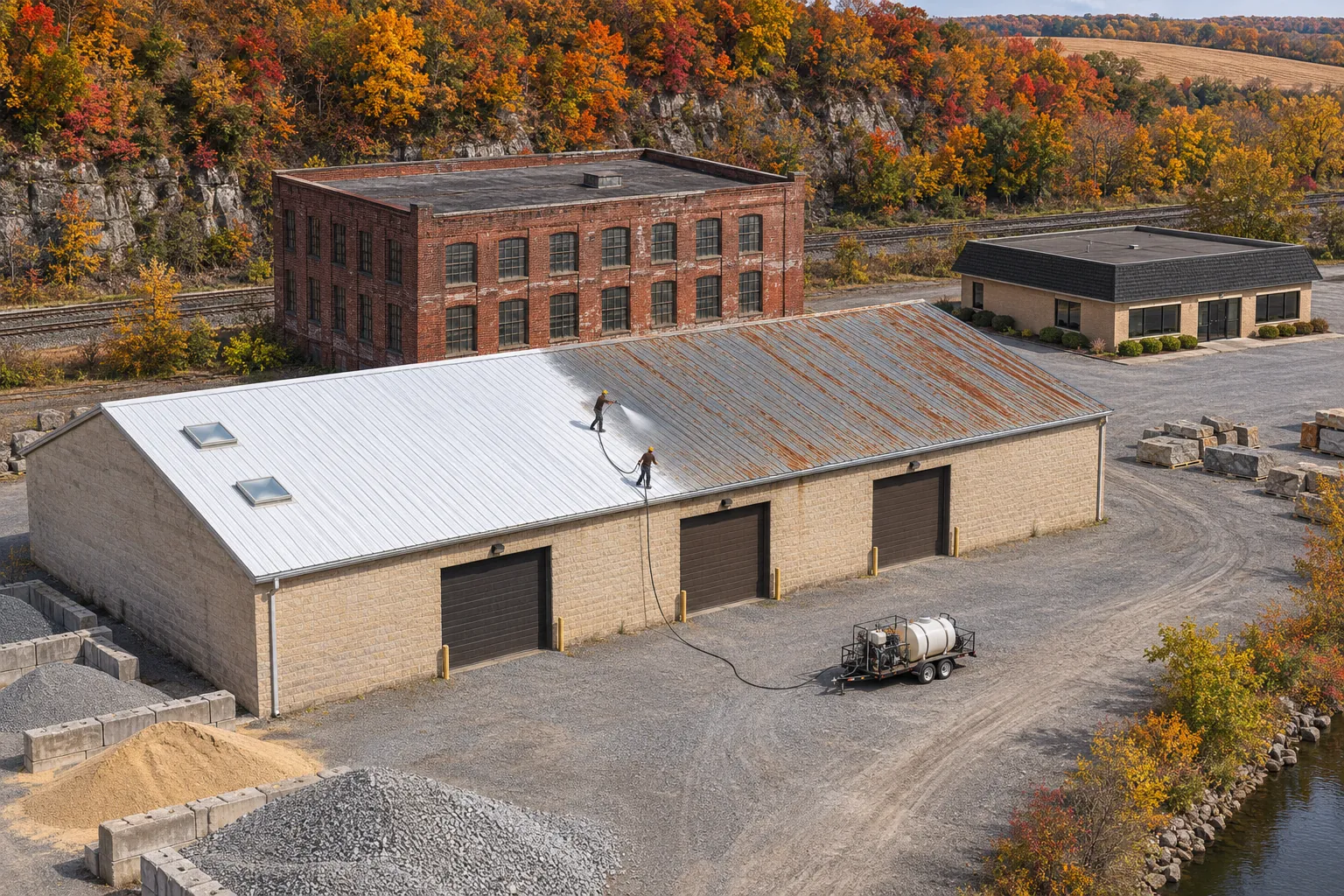
Clifton Heights metal roof coating starts where the old finish is failing. We open up peeling areas, check the metal, then recoat.
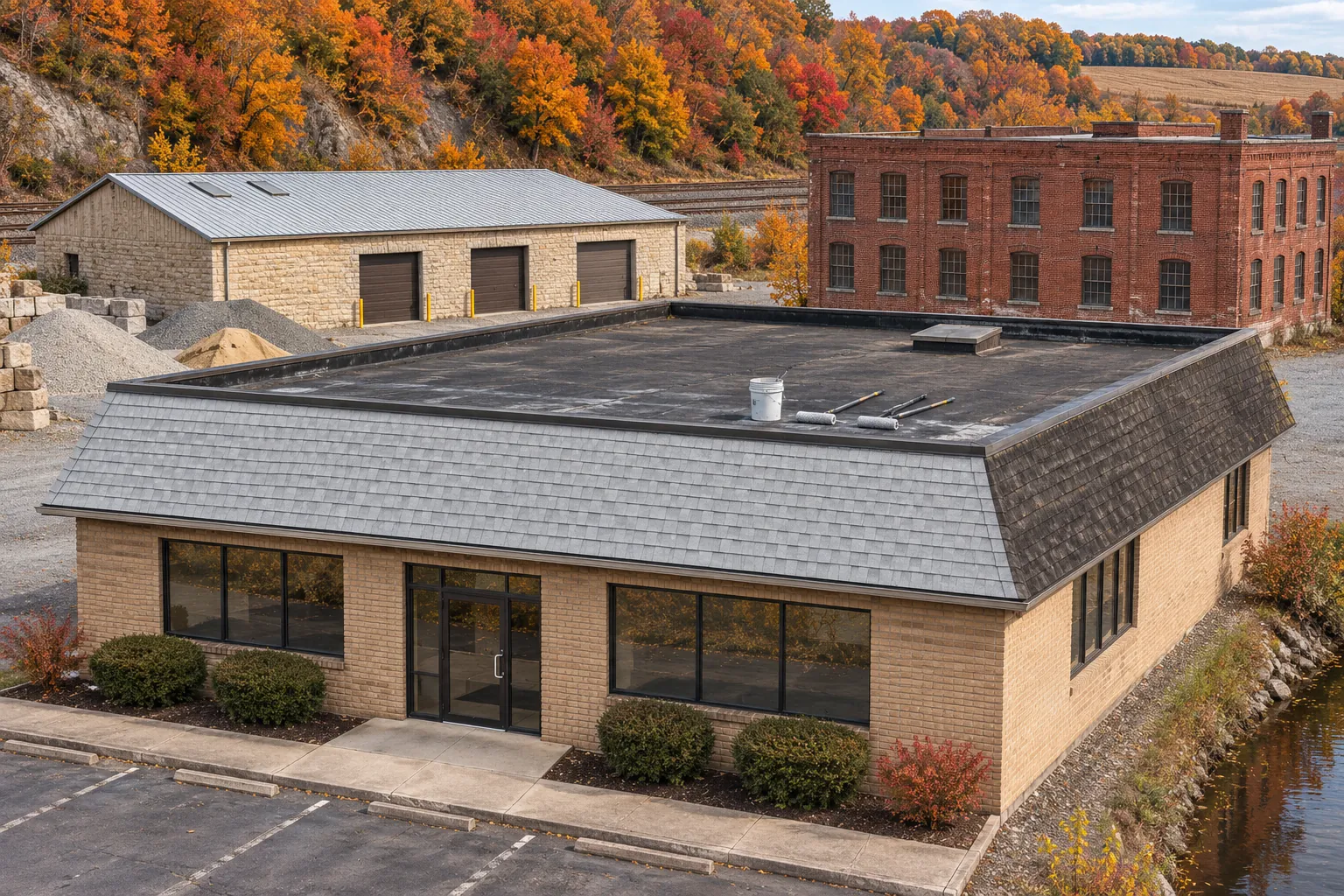
Clifton Heights metal roof coating jobs often begin with a roof where the last coating is peeling. Loose film can hide corrosion, trapped moisture, or panels that need replacing. We open up the failing areas, check the metal and the bond of the coating around them, and define the preparation from what we find.
A fresh layer goes on only once the adhesion problem is solved, so the new coating grips washed, primed metal instead of a film that is already letting go.
Peeling coating rarely fails on its own. These five causes turn up under it.
Moving laps flex the film until it tears and lets water under it.
Laps get stitched and sealed, and the loose film around them comes off.
Water trapped under the old coating keeps steel wet.
Blisters are opened, rust brushed off, and the steel primed before recoating.
Earlier coats went over unwashed, chalky metal and never took hold.
Adhesion tests find weak areas, which get stripped back and washed.
Corrosion has eaten through some panels where coating hid it.
Those panels are replaced with matching metal before coating.
Torn film lets rain soak the insulation below.
Wet material gets found and replaced so new coating covers a dry roof.
Coating pulled thin around penetrations cracks first and peels outward from there.
Flashing at curbs and pipes is rebuilt, and those details get extra coating before the field.
A Clifton Heights roof with failing coating before the work and after it.
Roofs with peeling coating in Clifton Heights usually take one of these routes.
| Option | Goes Over | Build | Plan Around |
|---|---|---|---|
| Spot removal and recoat | Peeling in limited areas | Scrape, prime, full coat | Edge of the firm film |
| Full strip and new system | Peeling across the field | Removal, wash, two coats | Debris and time |
| Panel replacement and coat | Corrosion through some panels | New panels, primer, coating | Matching profiles |
| Lap repairs and maintenance coat | Peeling only at moving laps | Stitching, seam work, topcoat | Old film checked first |
Call and tell us where it peels and whether leaks follow. We will check the metal under it before quoting any recoat.
Five steps, starting under the failing coating.
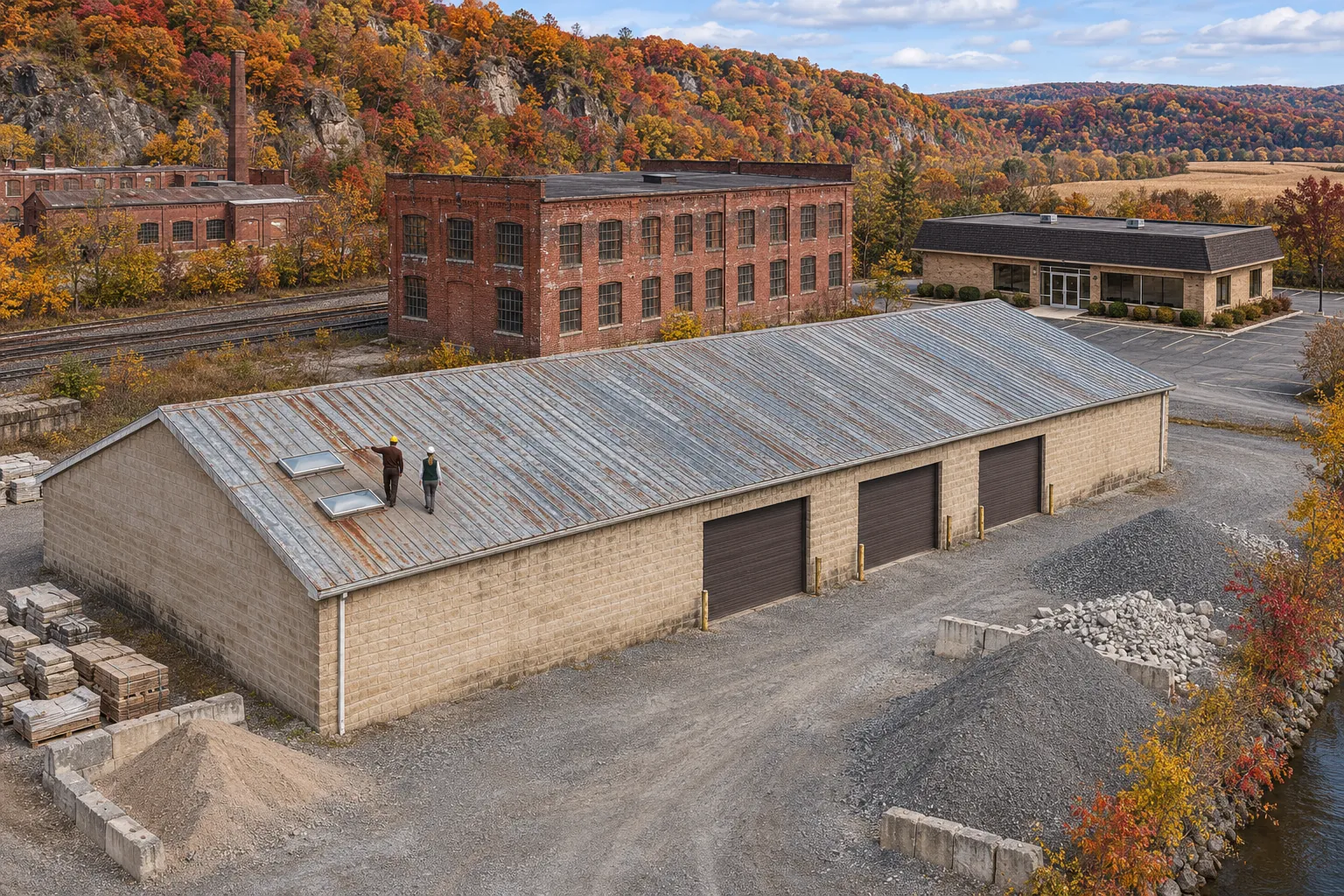
Peeling areas, blisters, laps, and screws get mapped, and test cuts show what sits under the old film.
Loose film comes off to a firm, feathered edge so the new coating has solid ground to bond.
Corroded panels are replaced, laps stitched, and screws swapped where they have backed out.
The whole roof is washed, bare steel primed, and chalky surfaces cleaned until a test patch grips.
Base and top coats go over the prepared roof at measured thickness, covering old and repaired areas alike.
Clifton Heights is on our list of five towns for metal roof coating beyond Easton. Somewhere else? Call us or send us a message.
Warehouse roofs with mixed old finishes, tested first.
Repaired panel laps checked for movement first.
Low spots traced to their cause before silicone.
Exhaust residue cleaned from vents before coating.
Question about your own roof?
Call UsIt can, so failing areas get opened up before any recoat. We check the remaining metal and how well the surrounding coating holds, then set the preparation. A new layer never goes over an unsolved adhesion problem or over panels that need replacing.
Yes. Clifton Heights is one of the five towns we cover beyond Easton, with the same roof walk and repair order.
Plan near $2.50 to $4.00 per square foot of roof for coating and near $5 to $8 for replacement. Stripping old film, panel swaps, rust work, and coating build decide where a Clifton Heights roof falls, and the roof walk shows how much of each the job needs.
Prep and coating run in sections, with work above entrances timed for quiet hours and walkways below kept clear. Scraping debris is bagged on the roof, so nothing falls toward customers or parked cars.
The usual causes are coating applied over chalky or dirty metal, moisture trapped underneath, laps that kept moving, or a product mismatched to the old surface. We look for the cause first so the new coating avoids the same failure, and we write down what we found at each peeling area.
Only what fails. Loose film comes off to a firm edge, and areas that still grip stay after an adhesion test. A roof peeling across most of the field usually gets a full strip, since patching around constant failures costs more over time than starting clean.
Coating over loose film peels again with it. The failing coating comes off first so the new layer bonds to firm material.
Tell us where the old coating is failing. We check the metal underneath and recoat once the bond problem is fixed.